IWOTA - International Workshop on Operator Theory and its Applications
Une conférence satellite de l'ICM,
3-7 août 2026
.png)
Conférenciers
%20(1)%201.png)
Programme
Conférenciers pléniers
Conférence Israel Gohberg ILAS-IWOTA
La conférence Israel Gohberg ILAS-IWOTA a été introduite en août 2016 et rend hommage à l'héritage d'Israël Gohberg, dont les recherches ont franchi les frontières entre la théorie des opérateurs, l'algèbre linéaire et des domaines connexes. Cette conférence est en collaboration avec l'International Linear Algebra Society (ILAS). Les dons pour le Fonds de conférences Israel Gohberg ILAS-IWOTA proviennent de particuliers et d'entreprises. Plus particulièrement, Springer/Birkhäuser Verlag soutient l'IWOTA depuis 1983 avec ses actes dans la série Operator Theory: Advances and Applications (OTAA). Springer/Birkhäuser Verlag est également un contributeur majeur au Fonds de conférences Israel Gohberg ILAS-IWOTA. Les dons sont toujours les bienvenus via le site ILAS : ilasic.org.
Résumé des conférences
Nilima Nigam, Approximation, computation and spectral geometry
Spectral geometry is concerned with the relationship between the geometric properties of a domain and the spectra of (typically elliptic) operators defined on them. Approximation theory and numerical analysis provide powerful tools to study the spectra of operators, and careful computations can lead to both insight and assistance with proofs. There is rich mathematics at the interface of numerical analysis and spectral geometry.
In this talk we explore these connections through two examples. In one, high-accuracy discretization reveals insight into the structure of the Steklov spectrum, whilst in the other example ideas from numerical analysis are used to prove a modification of Schiffer's conjecture.
Emmanuel Fricain, Dynamical properties of Toeplitz operators
In this talk, I will review some recent results concerning the hypercyclicity of Toeplitz operators on the Hardy space. An operator Ti is said to be hypercyclic if there exists a vector ix whose orbit under iT is dense. Motivated by results of Shkarin and Abakoumov–Baranov–Charpentier–Lishanskii, we investigate the case of Toeplitz operators with smooth symbols. Using a beautiful model developed by Yakubovich and the Godefroy–Shapiro criterion, we obtain, in some cases, a complete characterization. This is a joint work with S. Grivaux and M. Ostermann.
Ilia Binder, Computability in Analysis and Dynamical Systems
The lecture is devoted to the role of computability theory in the study of classical objects of analysis and dynamical systems, from a perspective closely aligned with modern operator theory. The central question is deceptively simple: given an analytically well‑defined object, can it be effectively approximated by an algorithm? While existence and structural results form the backbone of functional and harmonic analysis, computability theory reveals an additional layer of complexity, distinguishing between objects that exist abstractly and those that are accessible in any constructive sense. This distinction turns out to be essential even in very regular analytical settings.
I will illustrate these ideas through several examples involving operators and invariant structures. In computable thermodynamic formalism, questions concerning the computability of pressure, equilibrium states, and invariant measures are naturally formulated in terms of transfer operators, whose spectral and asymptotic properties may exhibit fundamental non‑computability. Similar phenomena appear in harmonic analysis and in computable Carathéodory theory, where classical convergence and boundary correspondence theorems fail to admit effective counterparts. The talk will also discuss the existence of non‑computable Julia sets, showing that even when the defining dynamical system and its parameters are computable, the resulting invariant set may be algorithmically inaccessible. From the operator‑theoretic point of view, these results highlight a persistent gap between analytical control and effective realizability, and suggest computability as a unifying framework for understanding intrinsic limitations in analysis and dynamics.
Lajos Molnár, Isometries and maps preserving means on positive cones in operator algebras
Building on the extensive study of linear isometries on algebras of functions, matrices, and operators (see, e.g., the Banach–Stone theorem and its extension for C*-algebras given by Kadison), we consider nonlinear isometries of positive cones in operator algebras with respect to some distinguished metrics. These mappings turn out to be closely related to transformations that are algebraic morphisms with respect to certain operator means as binary operations. In the talk, we will present an overview of our results concerning these types of geometric and algebraic transformations.
Akram Aldroubi, Operator Iterations, Frames, and Dynamical Sampling
Dynamical sampling is a framework encompassing a broad family of inverse problems in which unknown quantities, whether initial conditions, source terms, driving forces, or other unknowns, must be recovered from space-time samples generated through the action of an evolution operator. Rather than relying on a single, densely sampled snapshot, one exploits the dynamics of the underlying system across multiple time levels to compensate for limited spatial measurements.
In this talk, we give an overview of several key problems within this framework. We discuss the initial condition recovery problem, where the iterates of a bounded operator, sampled at fixed spatial locations, give rise to frame-theoretic conditions that govern stable reconstruction. We then turn to the source recovery problem, in which an unknown driving term must be identified from the observed evolution, leading to a different but related set of operator-theoretic questions. Throughout, we highlight how spectral theory, particularly of normal operators, and frame theory provide the natural language and tools for analyzing these problems.
We will also discuss open problems and connections to related areas including sampling theory, operator algebras, and applied harmonic analysis.
Joel Tropp, Stahl's theorem and random matrices
Stahl's theorem, formerly the BMV Conjecture, is a beautiful and deep fact about the monotonicity properties of the trace exponential function on self-adjoint matrices. This talk describes some elegant new applications of Stahl's theorem in the study of random matrices.
Preprints: arXiv:2501.16578 and arXiv:2603.04365.
Ilia Binder, Negative powers of Hilbert-space contractions
I shall discuss the following theorem, which confirms a conjecture of Jean Esterle. For each closed subset E of the unit circle of Lebesgue measure zero, there exists a positive sequence u\to\in$s with the following property: if Ts is a contraction on a Hilbert space such that ssi\s(T)\s E and ||T²||=O(u²)aaaaai as n\to\insi, then Ti is a unitary operator.
Pamela Gorkin, Finding Ellipses: The connection between Blaschke products and the numerical range
The numerical range of an n\tiiin complex matrix A is defined by
\[W(A) = \{<Ax, x> : x \in C^n , \|x\|= 1\}.\]
In general, it’s not easy to compute the shape of the numerical range. In this talk, we investigate the question of when numerical ranges of matrices are elliptical by connecting this phenomenon to two seemingly different settings: function theory and projective geometry. Starting with n = 2ii and extending to general n leads to a class of operators known as compressions of the shift operator. This viewpoint provides new insight into the numerical ranges of these operators and highlights special features that emerge when the numerical range is an ellipse.
Matthew Kennedy, Noncommutative majorization
The theory of majorization was introduced by Hardy, Littlewood and Pólya in order to formalize the intuitive idea of one set of numbers being more "spread out" than another. They established a surprising characterization of this property in terms convex functions, which allowed them to provide a unified approach to a number of seemingly disparate inequalities from in the literature from that era. The theory of majorization has subsequently found important applications throughout mathematics, mathematical economics and, more recently, quantum information theory. In this talk, I will discuss these developments and introduce a generalized theory of majorization, where numbers are replaced by (not necessarily commuting) matrices.
This is joint work with Paul Skoufranis.
Chair: Orr Shalit
Felix Schwenninger, Spectral Constants for numerical ranges in Hilbert spaces and beyond
It is known that the numerical range is a C-spectral set for bounded operators on Hilbert spaces. More precisely, Crouzeix showed that there exists a constant iiiiiC>0 such that for any bounded linear operator iT on a Hilbert and any complex polynomial p, it holds that
$$\|p(T)\|\leq C \sup_{z\in W(T)}|p(z)|,$$
where iiiW(T) denotes the numerical range of Ti. We give a guided tour of several results and techniques related to the numerical ranges as Ci-spectral sets and the corresponding constants.
Besides the classical and notorious Hilbert space case, featuring Crouzeix's conjecture, we discuss variants for Banach spaces.
William Slofstra, Decision problems for operator algebras
A nonlocal game is a simple cooperative game used to explore the power of entanglement in quantum information. The optimal winning probability of a nonlocal game turns out to be the operator norm of an element of the tensor product of two free group algebras. Can we compute this operator norm? If we instead wanted to compute the operator norm in a single copy of a free group algebra (or similar ), this would be possible by the work of Schmüdgen, Helton, McCullough, etc. However, for the tensor product of two free algebras, the iiiiiiiiMIP*=RE theorem of Ji, Natarajan, Vidick, Wright, and Yuen shows that it is undecidable to compute this operator norm, even approximately. This has opened up a landscape of questions about decision problems in operator algebras. In this talk, aimed at newcomers to the area, I'll survey what we know already, and what we'd like to know. I'll include joint work with Mehta and Zhao, the recent iiiiiiiMIPco=coRE theorem of Lin, and hopefully lots of other results as time permits.
Marek Ptak, Conjugations and Unitary Operators
The aim of this talk is to present relations between families of conjugations (antilinear isometric involutions) anda given unitary operator iU in a Hilbert space H. The starting point is the classical Godic- Lucenko theorem saying that for each unitary operator iU there is a conjugation C such that iiiiiiiCUC=U^* i.e. iU is C--symmetric. The relations between spectral measure iE(\ ) of the operator iU and conjugations will be presented. The precise characterization of all conjugation such that a given unitary operator U is iiC-symmetric will be stated. Next the conjugations such that iiiiiiiUC=CU i.e. iU is iiC-commuting, will be studied and full characterization of such conjugations will be given.
The next part of the talk concerns conjugate orbit ssssssssssssssssssssssssssssssssss of the given unitary operator iU. Using the spectral measure of Ui the real part of iH will be set apart and its complexification will be done. In this language we discribe the conjugate orbit of U. Finally a special attention will be given for the multiplication operator iMiz on a space Liiiii²(µ,T) with an arbitrary measure iµ on the unit circle T.
The results covers joint work with William T. Ross and Javad E. Mashreghi.

Akram Aldroubi
Vanderbilt University, USA


Ilia Binder
University of Toronto, Canada


Pam Gorkin
(Conférencière Israel Gohberg ILAS-IWOTA)
Bucknell University, USA

Matthew Kennedy
University of Waterloo, Canada

Lajos Molnár
University of Szeged, Hongrie

Nilima Nigam
Simon Fraser University, Canada

Marek Ptak
University of Krakow, Pologne

Thomas Ransford
Université Laval, Canada
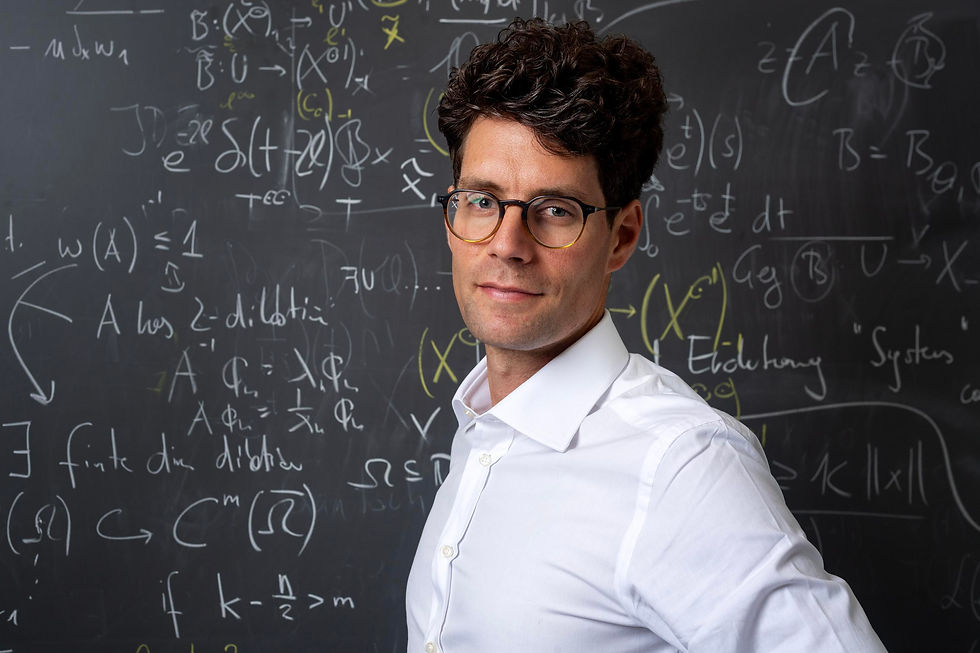
Felix Schwenninger
University of Twente, Pays-bas

William Slofstra
University of Waterloo, Canada
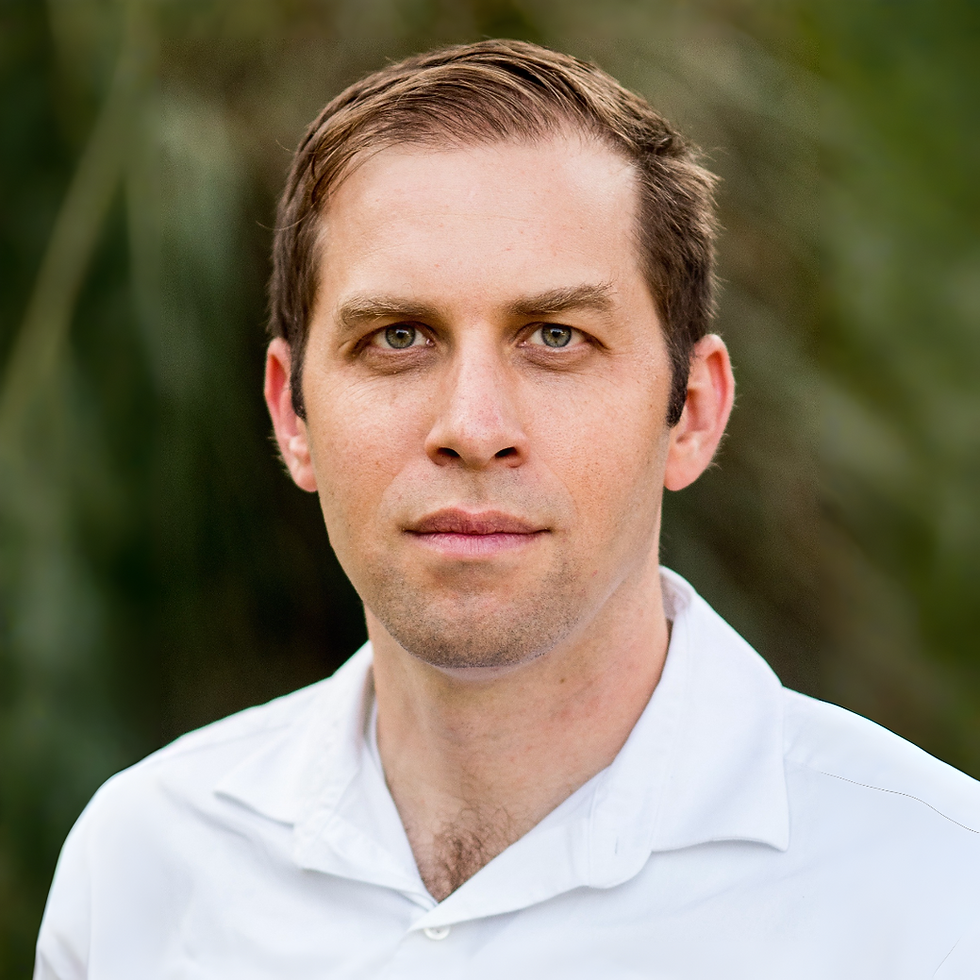
Joel Tropp
California Institute of Technology, USA